Key learnings
Advanced Next.js patterns including API routes, middleware, and server-side rendering optimization
Large-scale application architecture with proper Git workflows and collaborative development practices
Backend development with tRPC for type-safe APIs, Prisma for database management, and Auth.js for authentication, including troubleshooting its experimental features
Description
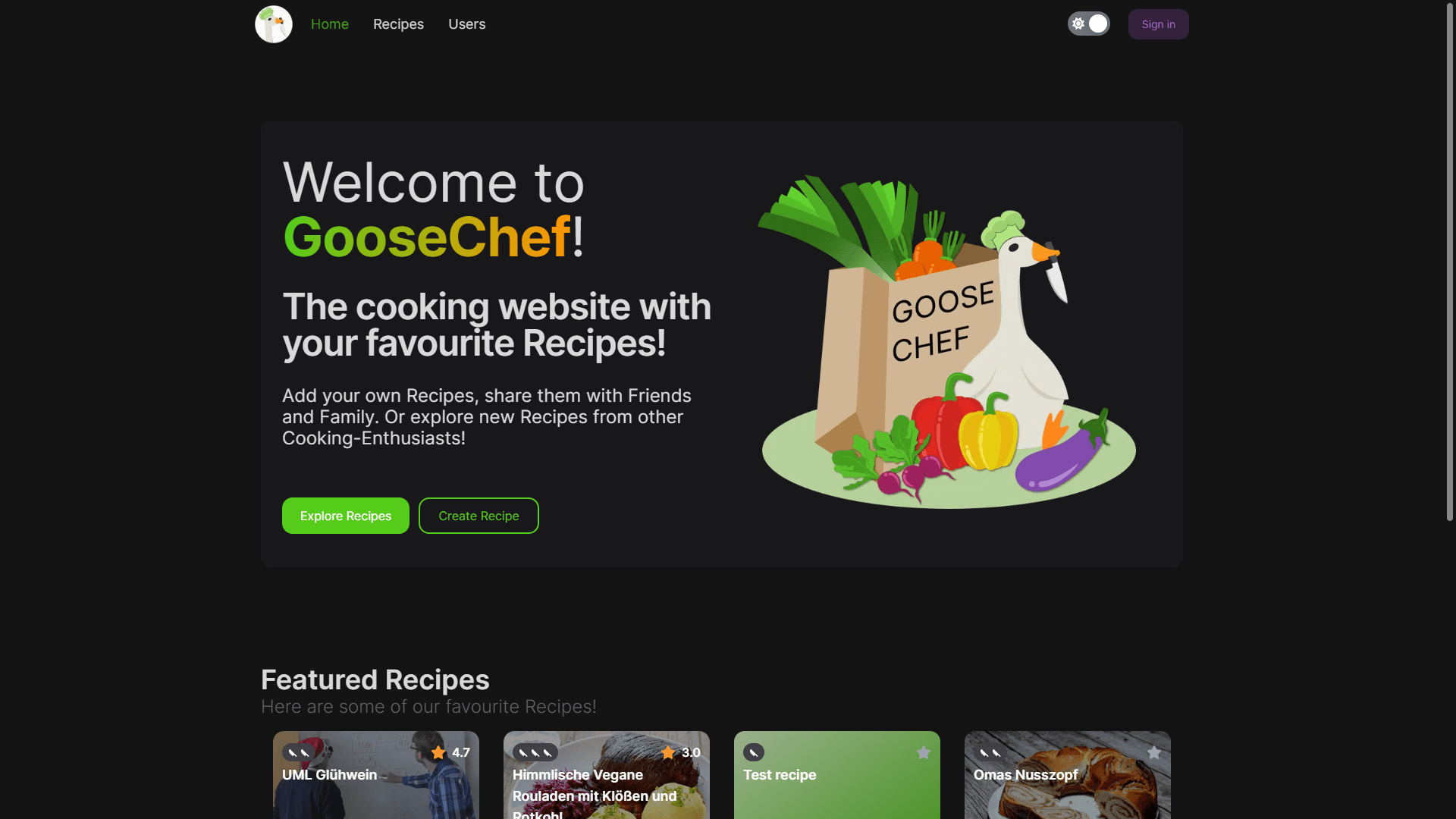
GooseChef is a full-stack recipe platform: a personal digital cookbook that is also a place to share recipes and discover what other people cook. Recipes can be searched and filtered by difficulty and by labels such as Vegetarian or Italian.
A recipe has its photos, an ingredient table and a list of steps, each with its own duration and the ingredients it uses. The portion control scales every amount at once, and the ingredients can go straight onto a shopping list.
The social side is built around reviews and people. Recipes collect one-to-five-star reviews, and users can follow each other and browse the community by how many recipes and followers they have.
Reflection
GooseChef was my first time building a production application in a team, with a structured Git workflow around it.
I had used Next.js before, but GooseChef went much further into full-stack architecture: tRPC for type-safe API calls end to end, and Prisma for the schema and its migrations.
I worked across the whole stack, from core UI components to API endpoints and the database schema. Working in a small team made me comfortable with splitting up tasks, reviewing each other's code, and iterating on features together.
The trickiest part was authentication, built on an experimental Auth.js beta. With sparse documentation and breaking API changes along the way, we had to debug edge cases ourselves and write custom helpers around it. It taught me a lot about debugging and about working with tools that are still moving.